Pacific Electric’s Beautiful PCCs: They Broke the Mold – Bigtime!

Ralph Cantos Collection

By Ralph Cantos

By the mid-1940s, more than 600 single end PCCs had been delivered and were in service across the USA. Most of the nearly identical air-electric PCCs had been built by the St. Louis Cars Co. Only 11 new PCCs built by Pullman Standard had been delivered to just one city, that being Baltimore. But that was about to change.

Pacific Electric’s 30 first ever, double-end, coupler-equipped, multiple-unit, and in my opinion, the MOST BEAUTIFUL PCCs EVER, were built by Pullman Standard, their largest order up to that time. The 600 or so PCCs built up to that time varied in length, width, seating, door arrangements, and electrical equipment. But in general, all 600 of those first PCCs were identical.

PE’s 30 double-enders literally stopped the PCC show. PE was thrust into the national public transportation spotlight. The cars broke with all existing established PCC tradition. Except for the 5 Market Street Railway hybrid PCC lookalikes, known as the “Magic Carpet Cars” or “One Arm Bandits”, virtually all PCCs were single enders.

Not only were the PE’s PCCs long and wide, they were able to operate in trains of up to 3 cars. This photo taken in early 1941 shows the “Pride Of The PE” in all their glory.

Orders for Pullman Standard built PCCs increased dramatically after the introduction of PE’s PCCs.

The General Electric Company — always the champion of electrically powered public transit vehicles — was eager to showcase the PCC. GE produced at least three lavish films featuring the latest types of electric transit, including the Trolley Coach. The first of these films produced in early 1937 (in black & white) was titled “Modern Electric Transit”. This film put a heavy emphasis on new trolley coach installations across America. Also featured were the new PCCs delivered to the Brooklyn and Queens Transit, Union Pacific’s M10000, ocean liners Queen Mary and Normandy. Even the Hindenburg was shown as the “Luxury liner of the Skies.”

The second film, “Life Stream Of The City” (in color, above) was produced around 1946-47 and showcased various rail operations both rapid transit and PCCs (surface cars) and trolley buses. PE’s PCCs were shown in a positive spotlight.

The last of these GE films to feature PCCs was tilled “GOING PLACES” and was produced about 1952-53. It once again showcased PE’s PCCs as well as LATL’s near new P-3s at Rimpau Loop. Most of this film was made on the Shaker Heights Rapid Transit featuring new Pullman Standard MU PCCs.

Unfortunately, by the mid-1950s, General Motors had begun an unstoppable campaign in print and film media to sell America on buses, Chevys and Buicks. One film “Lets Go To Town” (above) showcased GM’s latest buses “with their smart new interiors.”

Not content to sell America on buses, GM produced still another film titled “Give Yourself The Green Light” (above). This film encouraged the construction of interstate highways across America. This particular film hit below the belt in showing the Pacific Electric’s abandoned and destroyed right-of-way at the Barham Boulevard bridge in the Cahuenga Pass, stating the placement of rail line tracks in the center of “Expressways” was a waste of taxpayers’ money. The space occupied by rapid transit tracks would be better used for motor vehicle traffic lanes.

GE produced at least one more transit related film titled “Rapid Transit – 1964”. This film showed no PCCs, but rather showcased new rapid transit operations in Chicago and Toronto. From then on, GE concentrated on jet engines and diesel locomotives.

General Motors had won the battle and the war. Too bad for everyone.

Ralph Cantos Collection
Pacific Electric Headquarters, 1910-1911

Library of Congress Collection

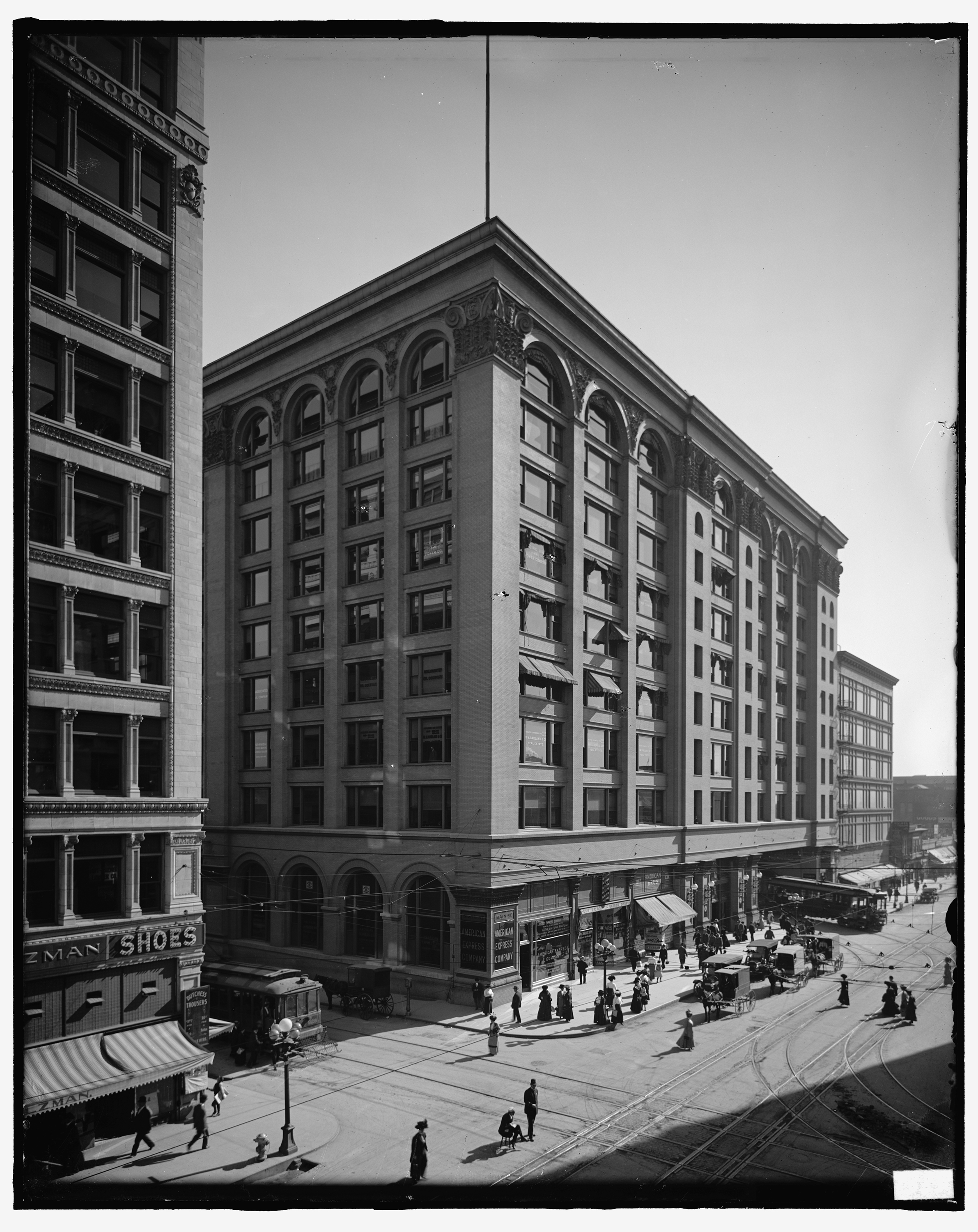
From Terry Salmans, who discovered this amazing image at the Library of Congress digital image archive, is the headquarters building of the Pacific Electric, circa 1910-1911. Taken by the Detroit Publishing Company for their line of postcards, the original image has a number of fascinating features, cited here by Terry:

Interesting is the PE 500 class car pulling into 6th and Main Station. In the lower left on Sixth St. a Arcade Depot – Edendale Local Line trolley is loading passengers. The car 928, a brand new Huntington Standard will be renumbered in a year or two into new PE 216. In 1912 the car is sold off to the Portland, Eugene & Eastern Rwy., another Southern Pacific subsidiary. Also notice the man on the stool next to traffic cop. I think that he might be a line inspector for the PE or LARY.

Library of Congress Collection

LAMTA at 6th and Main in Color

Jack Whitmeyer Collection

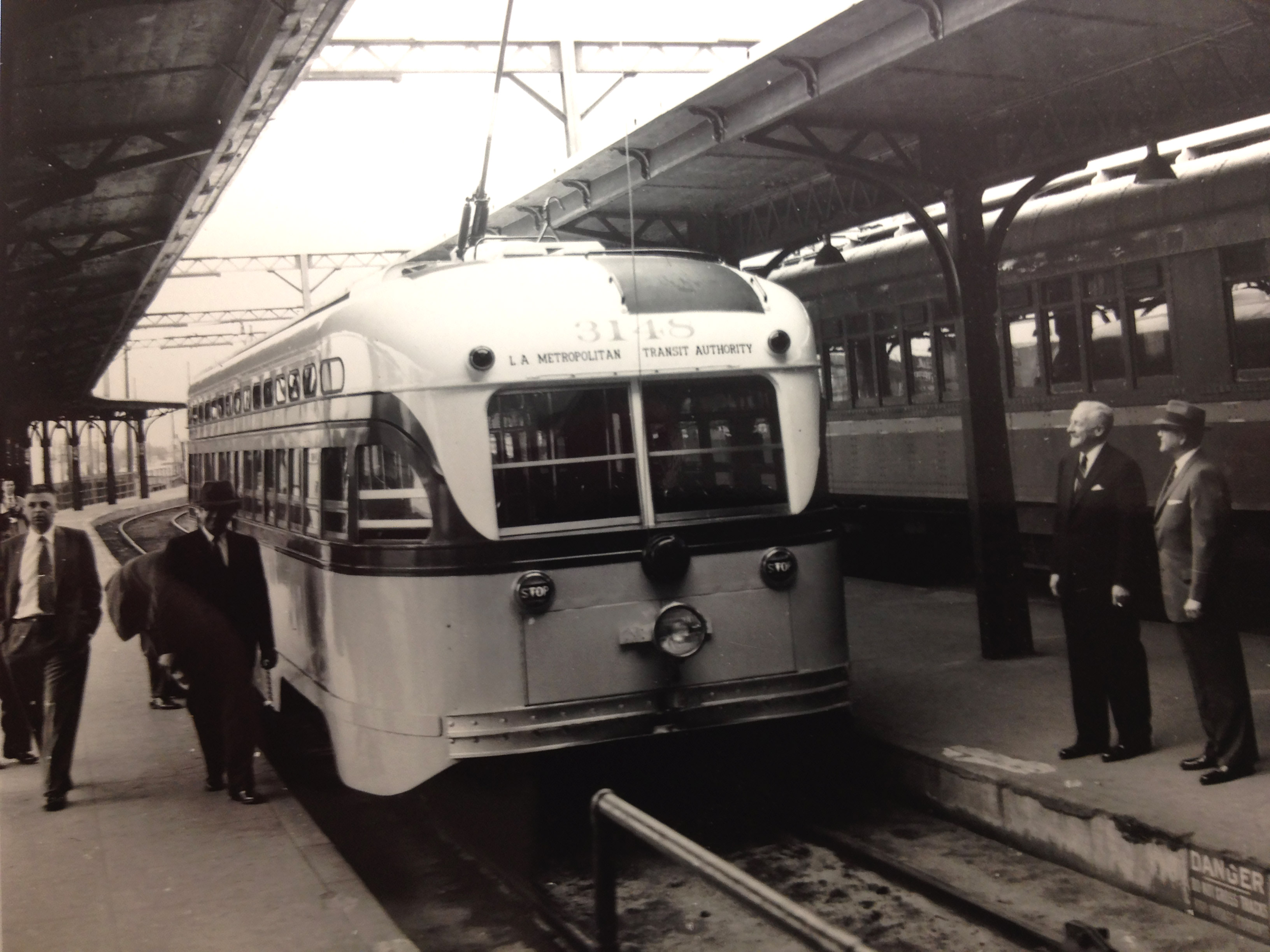
Here’s a never-before-seen image of Los Angeles MTA PCC no. 3148 at the 6th and Main Terminal on February 26, 1960, as part of the MTA’s “operational tests” of potentially using PCC cars on the Long Beach Line – then the only remaining major PE artery still in operation.

As noted in this article by transit historian Ralph Cantos, the MTA’s testing was a sham, with line shutdown imminent.

Jack Whitmeyer Collection

Railroad Boosters in Upland

Steve Crise Collection

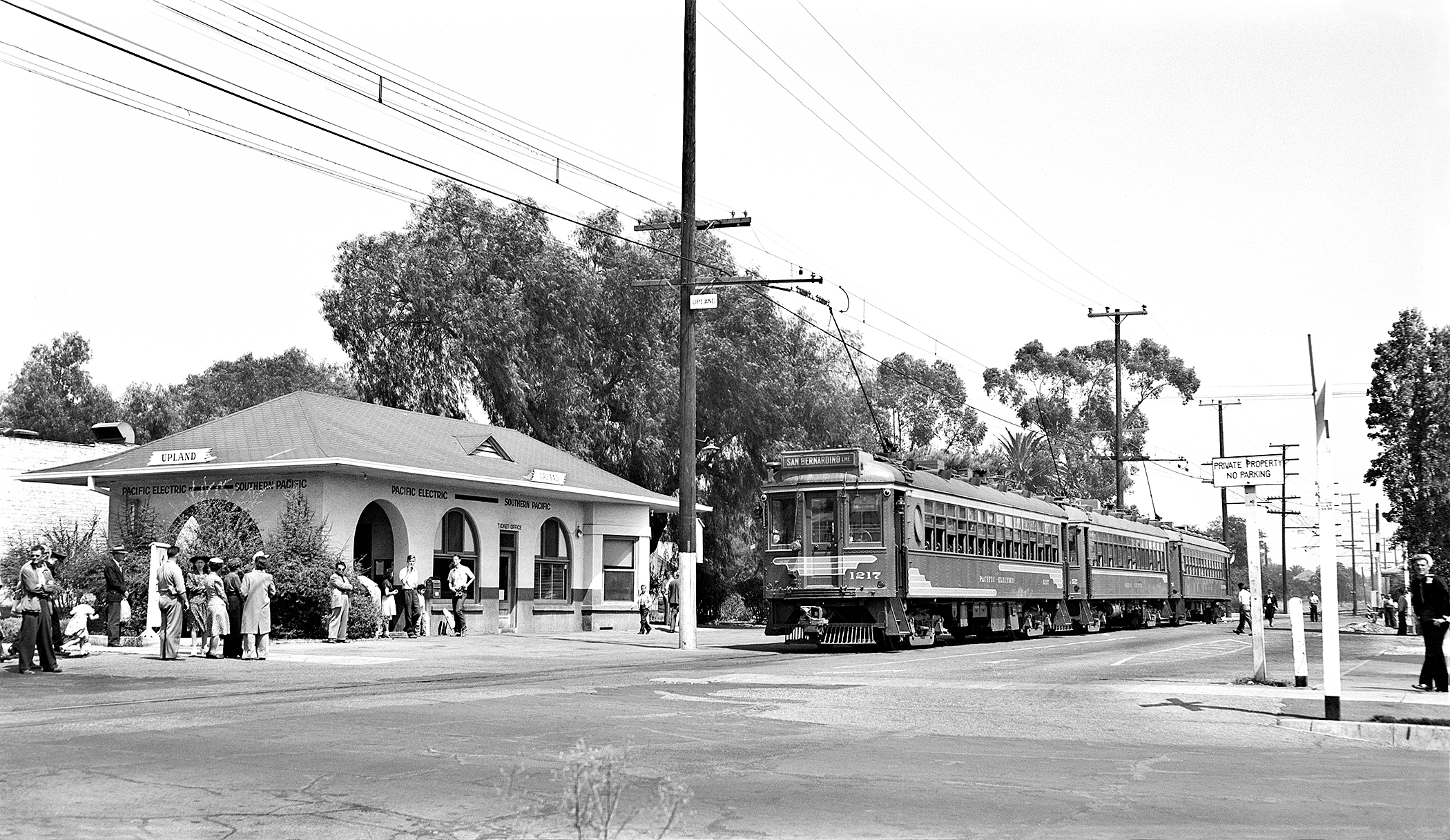
It’s September 7, 1947, and the Railroad Boosters Trip #57 (Orange Empire) is well underway as Pacific Electric units nos. 1217, 1242, and 1375 are lined up at the Upland PE depot in this fantastic shot.

Pacific Electric Tracks In The Cahuenga Pass: Some Final Thoughts

Ralph Cantos Collection

By Ralph Cantos

This publicity photograph taken on the north bound lanes of the Cahuenga Pass was staged for all to behold. Pacific Electric proclaimed that a new era in transportation had arrived in Los Angeles. Modern flexible motor buses could now be routed to meet the needs of the ever-changing San Fernando Valley.

I am sure that all the media text that accompanied the several photos, where produced by the Minister of Propaganda for General Motors. The propaganda department of GM had produced several films to be shown to civic leaders all over the USA. The most notorious of these films was titled “LET’S GO TO TOWN” (mid-1955). The film listed city after city across America that are “Going The Motor Coach Way.” The film showed PCCs in such cities as Detroit and Philadelphia as a slow, outmoded form of city transit. The film went on to say that streetcars (PCCs) operating on fixed guideways on narrow streets were as inefficient and outdated as the horse and buggy. The GM film also went on to say that bus routes could be changed at will, to meet the ever-changing needs of the City.

But in the decades that have passed since PE staged the “Modern Motor Coach Caravan” has proven beyond dispute, is that in general, the traveling public prefers rail transit over buses. To be sure, any transit system needs buses in their fleet as part of a balanced system. Buses have their place in such a balanced system. But, according to General Motors, all the needs of ANY major American City could be handled by fleets of buses.

Not mentioned in GM’s propaganda film is that what business man is going to invest assets built around a bus stop pole, that can be removed or relocated at the discretion of a City or Transit official. The film goes on to say, that major transit systems could sell off all out dated rail infrastructure. Not mentioned in the film is where are the buses to be stored and maintained. But sadly at this time in history, America ate up all the crap that GM could dish out and large scrap metal companies, Mexico City and Toronto would become the beneficiaries of this terrible waste.

Ralph Cantos Collection

LAMTA 3148 at 6th and Main

CJ Milch Collection
CJ Milch Collection

From transit fan CJ Milch comes this image and the following description:

It’s obviously at 6th and Main terminal on the northern side of the back elevated structure. Apparently a few Big-Wigs in suits looking on. Note the tacked-on back headlight that was likely fashioned up at an LAMTA shop. I also believe that this car also had a much longer trolley pole installed; the PCCs were not as tall as other cars and hence needed the added length to reach the catenary. No. 3148 sure looks out of place, but judging by the clearance to the platform it would have been easy to step aboard as opposed to climbing the stairs on the Blimps.

The big question is where they turned the car. It would be very difficult to back the car from Long Beach as the back up controller and brake are located behind the rear bench seat at the back of the car. One has to sit side saddle or kneel on the seat with your right hand on the controller, and your left hand out through the open back window with a grip in the trolley as a precaution against a de-wire and the pole springing up and catching a span wire holding the over head. And, you have to take out a gong pin stored in the seat back and drop it into a hole in the floor to ring the rear bell. (I’ve done several times at OERM on the 3001, 3100 and 3165 PCCs preserved there – it’s part of Qualifying on each car.) I’m sure this car had a trolley shoe and not a wheel on the end of the pole as LAMTA only had a few work cars equipped with trolley wheels left on them.

Other than this, I have no exact date nor indications of who the dignitaries may have been. I hope others can fill in more details. Let’s see what others know!

We turned to transit historian Ralph Cantos, who of course had the answer immediately!

For a few weeks in mid- February 1960, the LAMTA ran car no. 3148 on borrowed standard gauge trucks (SF MUNI no. 1024). The MTA ran the 3148 up and down the Long Beach line for tests to see if PCCs could be used to replace the Blimps. In reality, the whole damn thing was a scam. The MTA never had any intention of keeping the Long Beach service as a rail line. It was all a bunch of BULLSHIT!!! Just over a year later, the LB line was abandoned.

Ralph Cantos Collection

Here’s a shot from Ralph’s collection of LAMTA no. 3148 at Fairbanks Yard on February 23, 1960.

So there we have it! Thanks to CJ and Ralph for opening and settling this mystery!

1000s at Newport Pier

First American Historical Archive image, used with permission

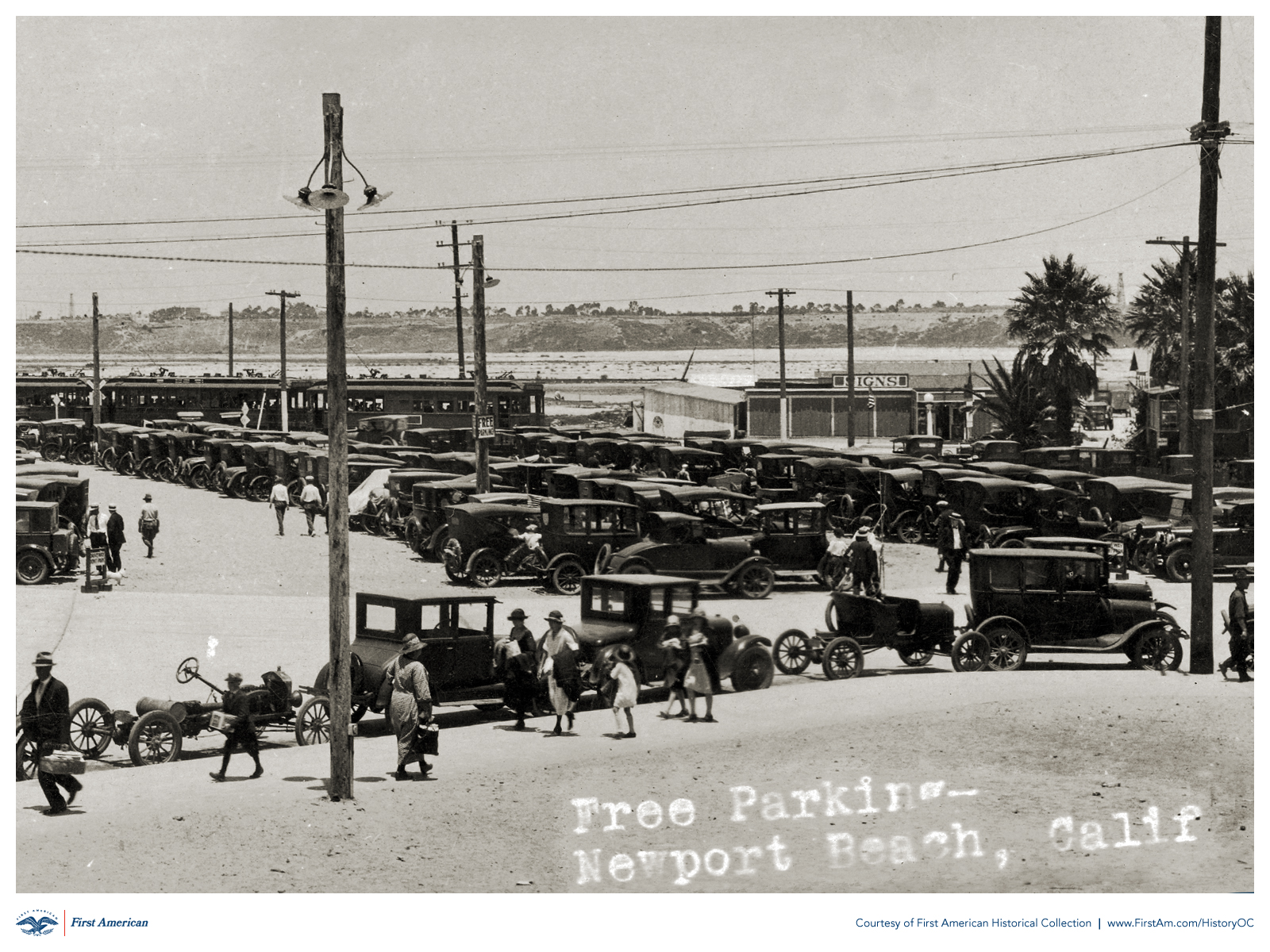
From Pacific Electric fan Terry Salmans comes this discovery from the First American Historical Archive. The following was written by Terry:

The postcard photo appears to have been taken during the late 1920s facing northeast from the foot of Newport Pier. In the distance can be seen a three car train of Pacific Electric 1000s. The train has just departed the Newport Beach Station en route to Balboa. It appears to be a holiday as the train is full. This photo is unusual. I’ve never seen a photo of such a large train on the Newport Line. Also notice in the distance is the undeveloped Lido Island. Lido was developed beginning in about 1930. – Terry Salmans

Our sincere thanks to First American for allowing us to reprint this image here. Please click here to visit their online historical archive, follow them on Twitter at @firstam and like their Facebook page at this location.

First American Historical Archive image, used with permission