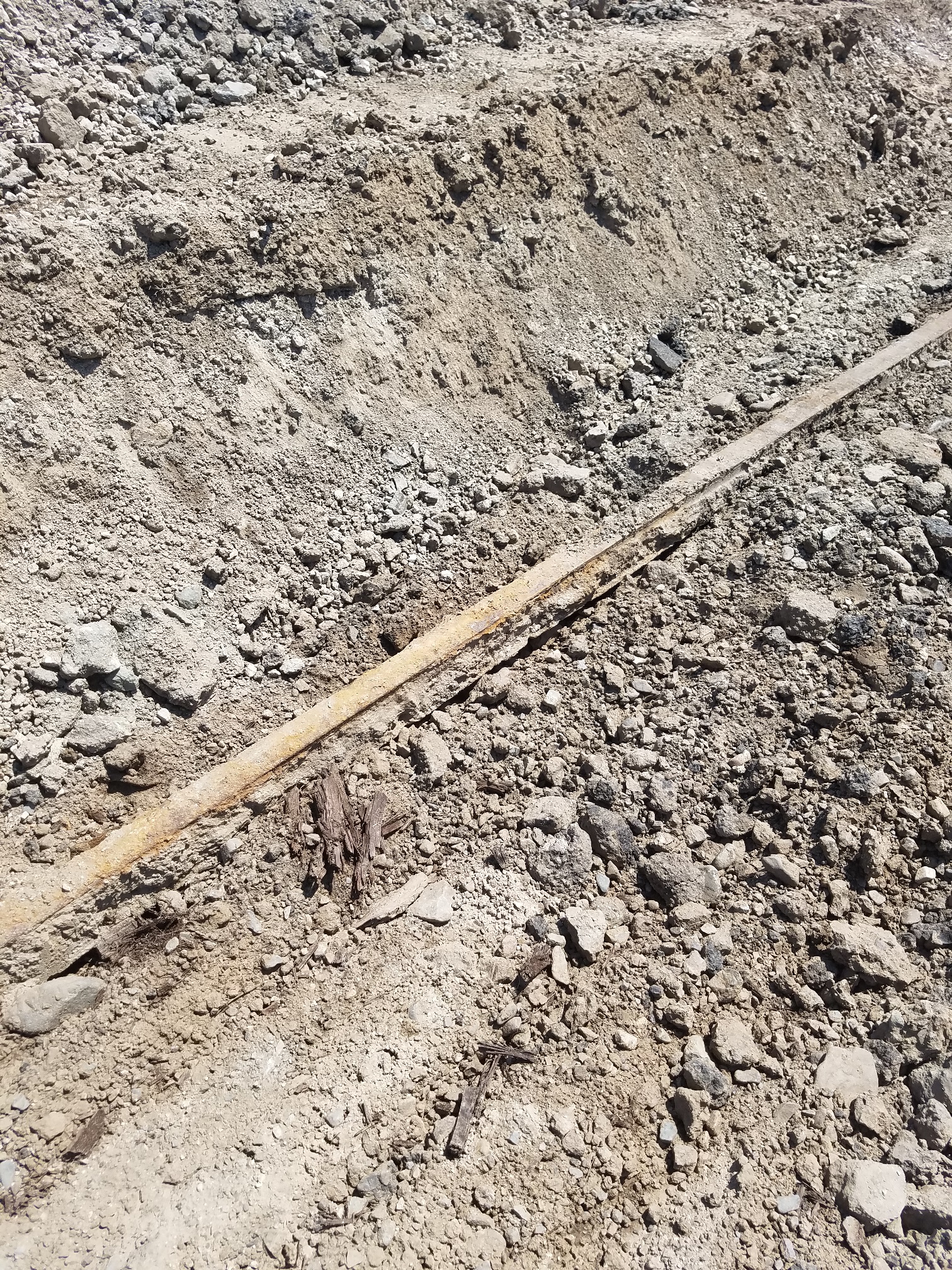
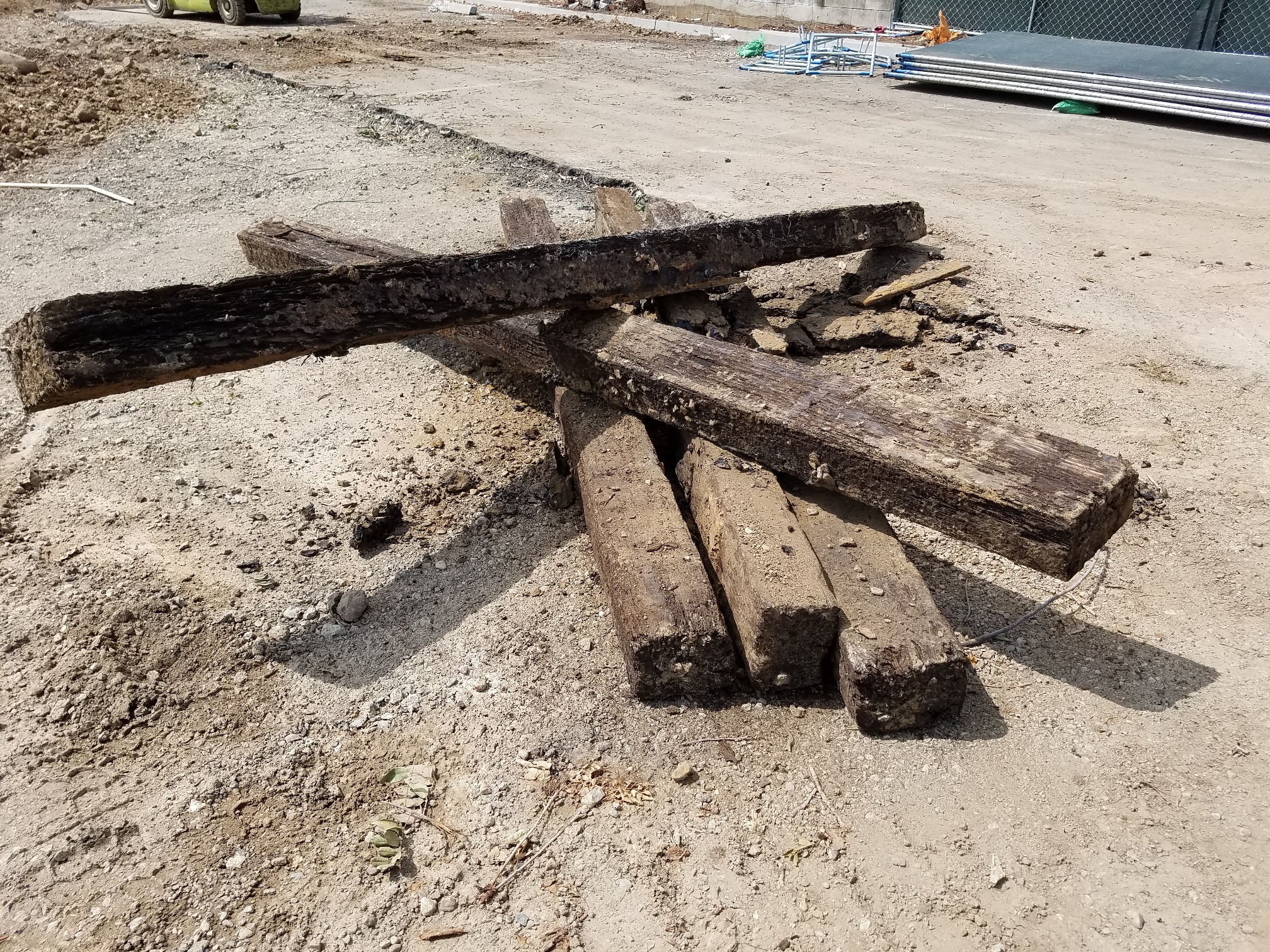
I am the Resident Engineer on a new parking structure project for the City of Orange in old town Orange, CA. We have started the clearing and grubbing work on the site. The environmental document stated the site was clear, but when we began excavating, we uncovered old PE freight tracks dating back to the Fruit Parking house days. I’m a bit of a railroad buff and love to find these types of things and thought of you guys.
Matt McMenamin Photos
Matt McMenamin PhotoMatt McMenamin PhotoMatt McMenamin Photo
Los Angeles Railway no. 67 photographed at Central and Slauson, Los Angeles, May 20, 1947. Bottom of negative has written in green ink “KILLE-WCW” – does anyone know what this might mean? Scanned from Negative 119 2 3/4″x 4 1/2″.
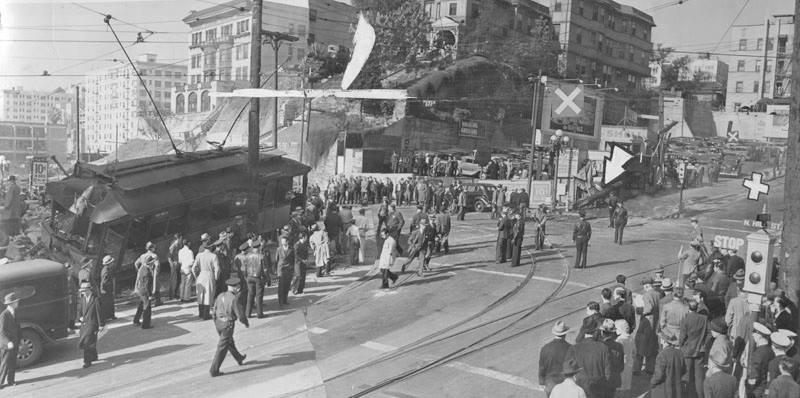
The Los Angeles Railway’s fleet of MAGGIEs worked the hilly I line for several decades. Unlike the majority of LARY’s car fleet that used air brakes, the MAGIEs used an electric magnetic brake located between the wheels on the standard LARY archbar truck, not unlike the magnetic brake on the more modern PCC truck. The I line was not very long, just a few miles running between Bonnie Brea Street on the west, where a connection was made with the D line, to First and Hill Streets on the east end.
The magnetic brake worked very well, BUT there was one fatal flaw in the design. As long as the trolley pole remained on the power wire, all went well. But on this fatal day, the trolley pole on MAGGIE no. 4 de-wired as the 4 descended First Street towards its terminal at Hill Street.
With the trolley pole de-wired and swaying in the wind, the hapless 4 now had no braking ability save for the hand crank brake. One can only assume that the motorman made a valiant attempt to stop the 4 with the hand brake, but to no avail.
The 4 came rampaging down First Street, crossing Hill Street and smashing into a small building on the east side of the street. The results are depicted in these two photos. Remarkably, no one was killed, but there were 8 injuries. South Park Shops was famous for building and re-building hundreds of LARY streetcars, but the 4 was not worth rebuilding, it was too far gone, and was scrapped on the spot. The I line was abandoned a few months after this 1939 accident. The remaining MAGGIEs were placed in storage at the sprawling Vernon Yard and were eventually scrapped during World War II.
Ralph Cantos Collection
Ralph Cantos Collection
Inside and out of an LARY MAGGIE.
Ralph Cantos Collection
MAGGIE no. 6 and one other sit on the scrap track along with retired Standards at Vernon Yard, 1943.
Al Donnelly Photos, Al Donnelly CollectionAl Donnelly Photos, Al Donnelly CollectionAl Donnelly Photos, Al Donnelly CollectionAl Donnelly Photos, Al Donnelly Collection
By Al Donnelly
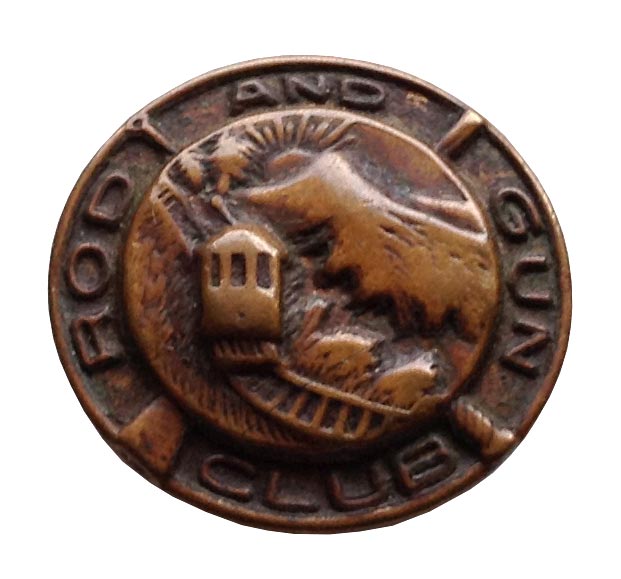
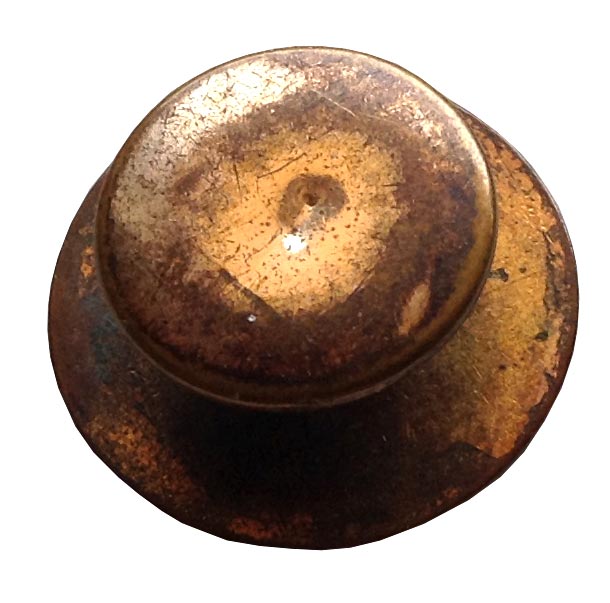
Design for the Alpine Division seems to betray the origin of this screw-back lapel pin as Pacific Electric. There are no makers marks to be found. While the club was quartered in the Annex to 6th & Main, presumably there is a connection implied with Mt. Lowe and the Alpine Tavern facilities.
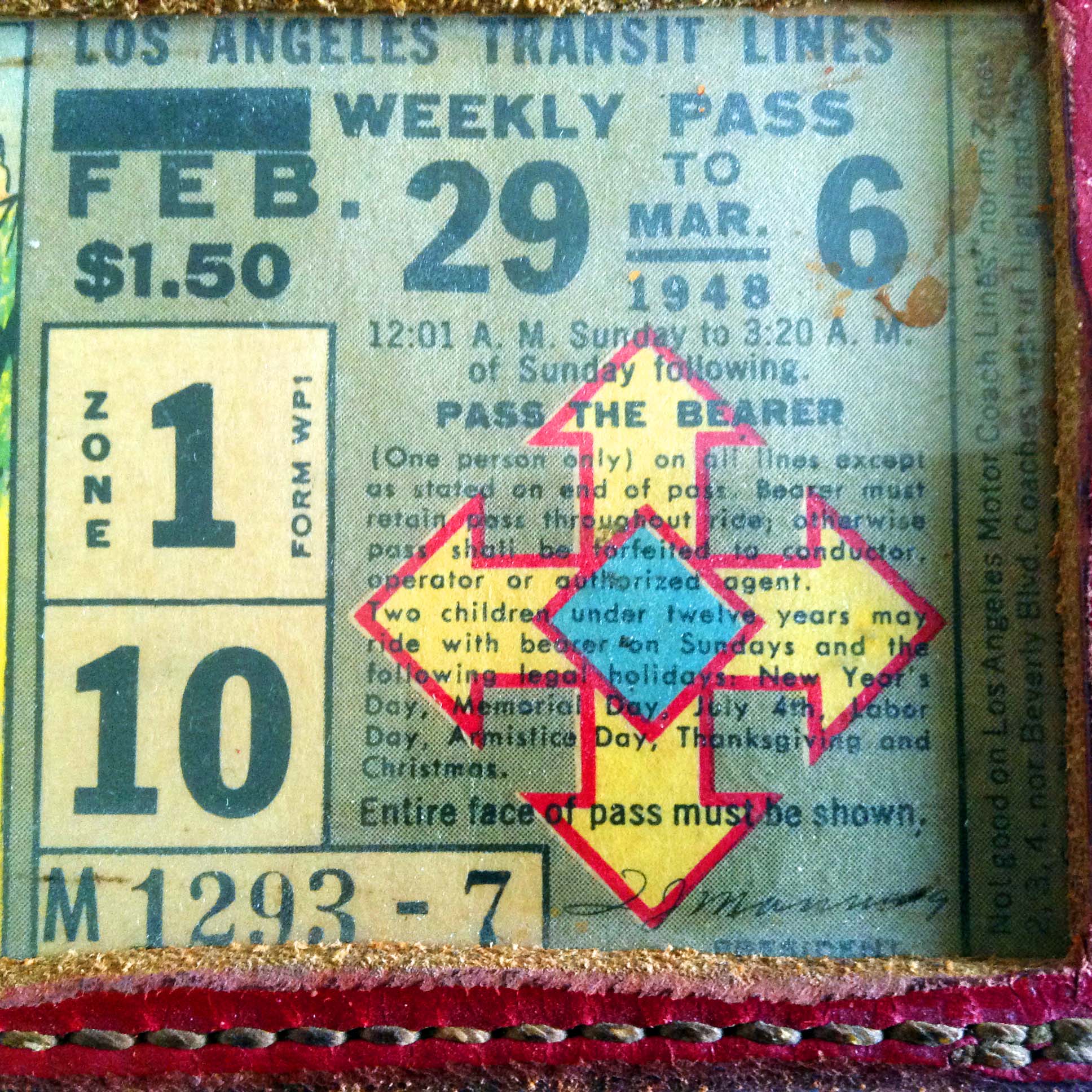
From the collection of Al Donnelly comes this beautifully preserved 1949 pass for the Los Angeles Transit Lines. As Al puts it, “a weekly pass six years before James Dean made the observatory into an icon.” Thanks for sharing, Al!
Al Donnelly Photos, Al Donnelly Collection
Al Donnelly Photo, Al Donnelly CollectionAl Donnelly Photo, Al Donnelly CollectionAl Donnelly Photo, Al Donnelly Collection
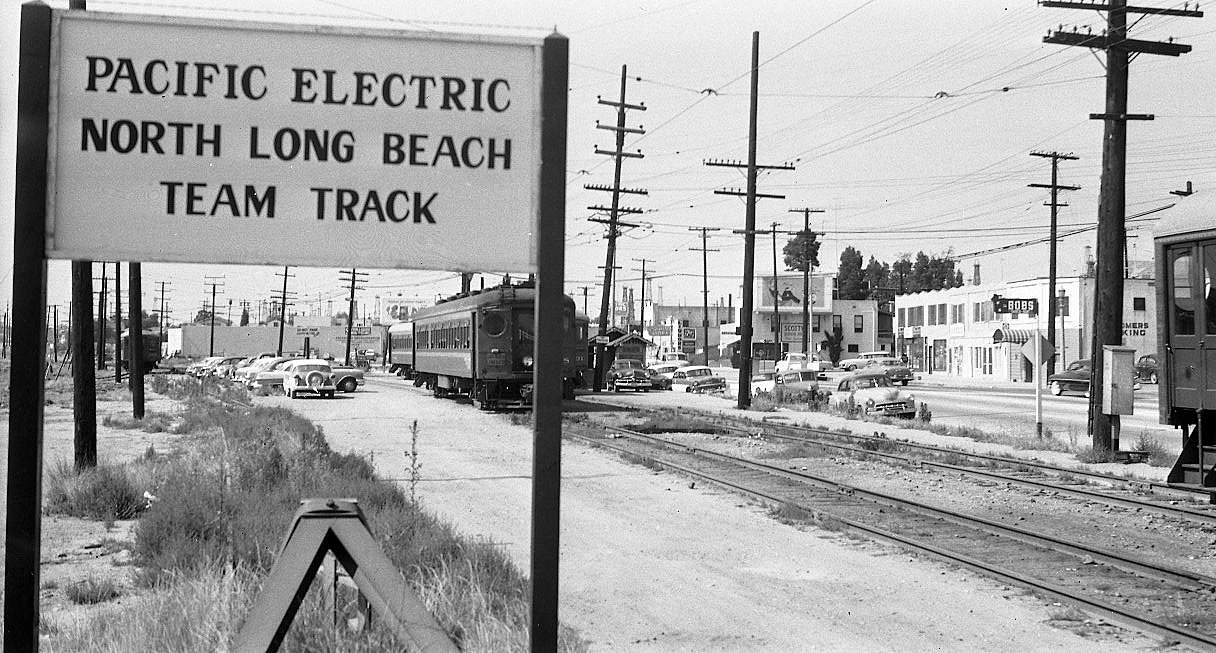
On June 28, 1957 there was an American Legion Parade on Ocean Avenue in Long Beach that blocked the tracks at the end of the Long Beach Line. For several hours, trains operated from the North Long Beach stop at Willow Street where there was room to spot additional cars and safely transfer passengers to/from buses. This was a Friday, so extra cars were placed there for the later afternoon traffic loads. The Willow Station of the Blue Line now occupies this exact area.
Stephen Dudley Photo, Stephen Dudley Collection
Transferring passengers from bus to a departing north-bound train. Another 2-car train positioned behind it. Single car no. 318 positioned on southbound main and Car no. 409 parked on the rarely used freight siding. Freight-only Newport line branches off to the left.
Stephen Dudley Photo, Stephen Dudley Collection
In the center of the picture, no. 318 parked awaiting arrival of no. #314 which will then be coupled to form a northbound 2-car train.
Stephen Dudley Photo, Stephen Dudley Collection
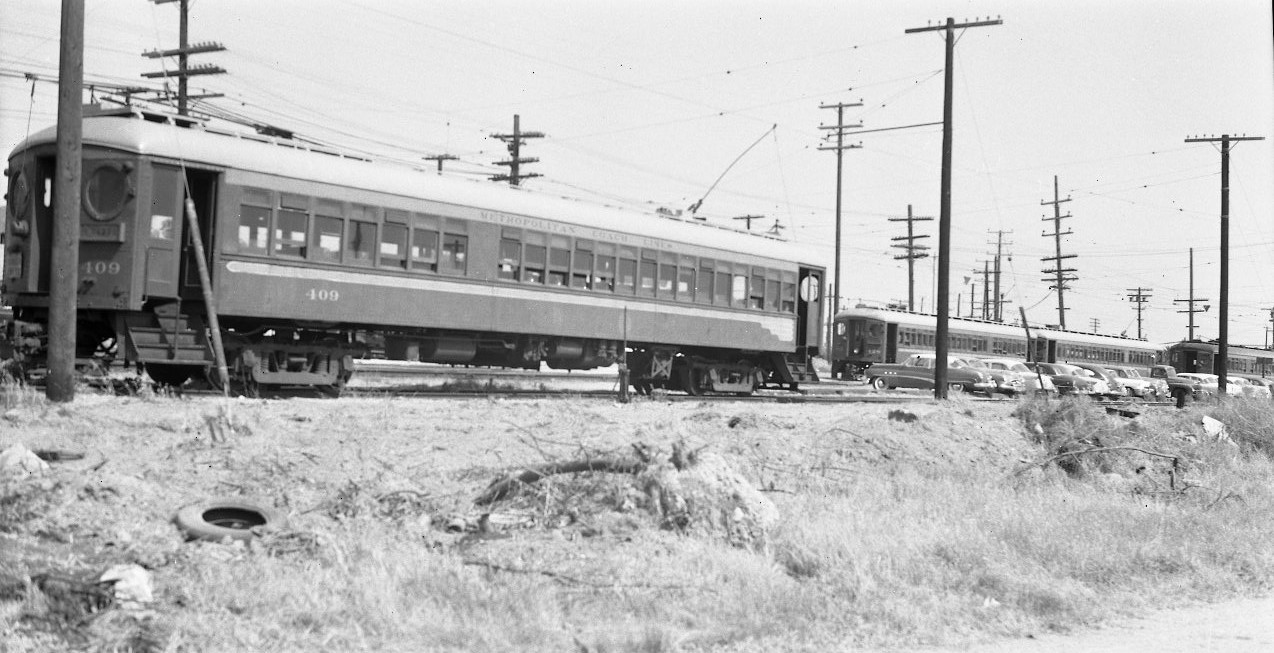
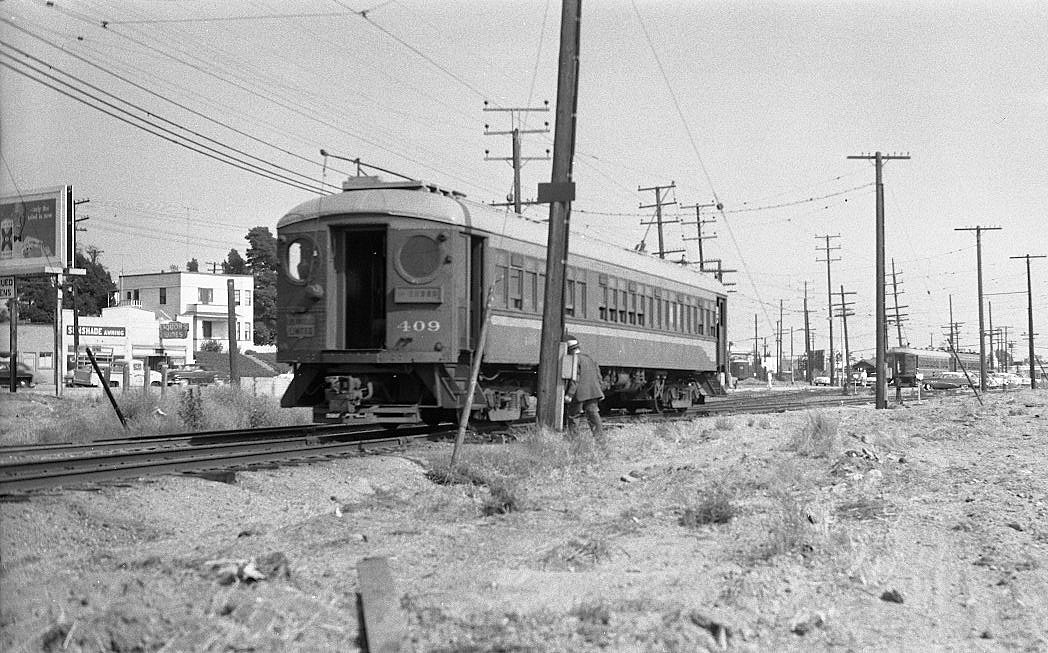
Side view of no. 409 on the freight siding.
Stephen Dudley Photo, Stephen Dudley Collection
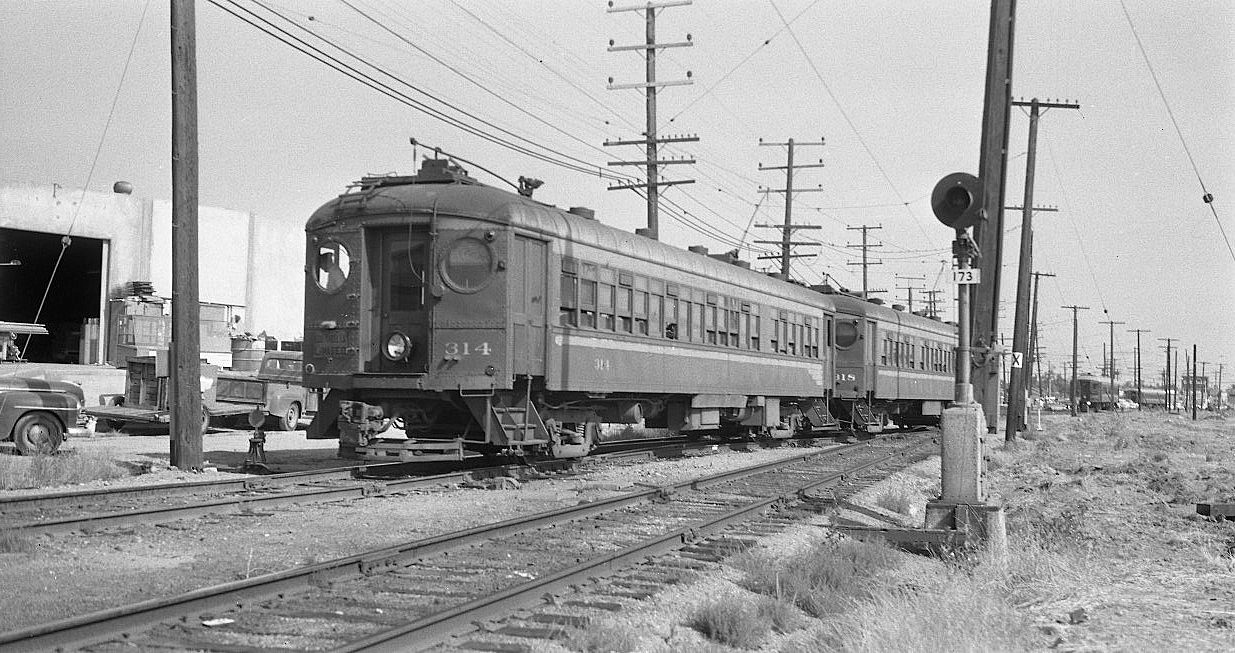
Cars nos. 314 and 318 with a northbound train taking the cross-over to the northbound track. Car no. 314 had previously arrived as a single car train and coupled on to 318 parked on the southbound track. Car 314 has been mentioned as being preserved at the Orange Empire Trolley Museum — thus, another picture during its operating days.
Stephen Dudley Photo, Stephen Dudley Collection
Car no. 409 had been previously parked on the freight track and was being repositioned to the southbound track to couple with a yet-to-arrive single car southbound train and then would head north as a later two-car train.
Stephen Dudley Photo, Stephen Dudley Collection
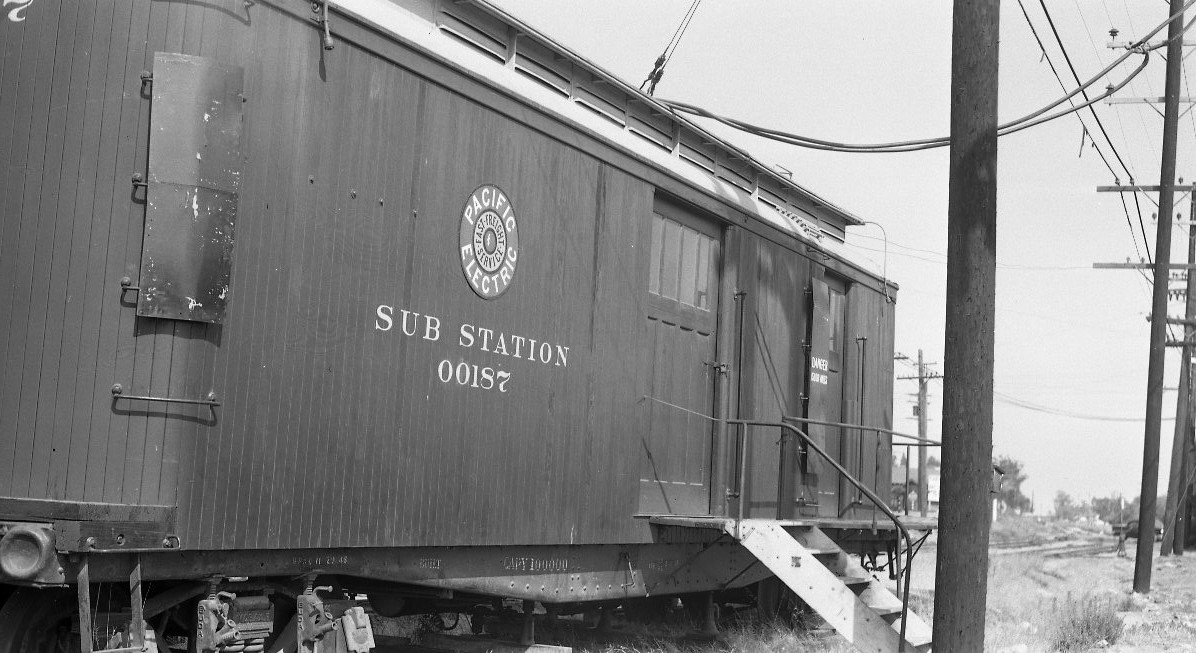
The portable substation no. 0187 at the Willow Street substation — on a substation siding off the Newport line. This portable substation had been there for many years and remained until the end of service on the Long Beach line.
It’s apparent that SP still enjoyed a considerable citrus traffic at Covina. In the distance, about 10-15 cars ahead of the engine, on the north side of the track can be seen the standpipe use for watering steam locomotives. Covina lay at the bottom of a grade that extended to San Dimas and La Verne and PE issued special instructions to address operations using retaining valves as well as maximum speed.
This photo was taken sometime in August to October, 1946 while on an inspection trip ordered by Pacific Electric management to view the trackage of Southern Pacific’s Covina Branch which PE was about to purchase. With all the dignitaries aboard, a road foreman or trainmaster is about to swing up the ladder and into the cab. Note he has the staff in his left hand authorizing occupancy of the main track between Irwindale and Covina. Upon arrival at the east switch of the siding the train will stop while this staff is replaced in the machine adjacent to the switch and another one authorizing movement to Lone Hill is obtained. The SP had installed their staff system many years prior on the Covina Branch and by 1946 it extended between Baldwin Park and Ganesha Jct. The inherent delays to stop and obtain staff authority caused much irritation to passengers as well as freight crews. Adding to the delay, PE installed their own staff system to protect movements on their single track line east of Monte Vista, (.58 miles east of the Covina station), to the connection with the SP at Lone Hill. The purchase of SP’s track between Bassett and Ganesha Jct. meant the ultimate abandonment of PE’s trackage between Baldwin Park and Lone Hill and to the citizens of Covina brought long sought relief from the presence of freight trains on Badillo St. through downtown Covina along with all traces of both SP and PE’s antiquated staff machine operations.
The motorman for the day is seen at the controls of the 1299 at SP Covina prior to installation of trolley overhead. Photo taken sometime between August and October, 1946.
In this October 1949 photo, Pacific Electric PCC no. 5021 rolls to a stop on Brand Boulevard at Broadway. This was urban rail transit at its finest. The Glendale-Burbank Line was perfection in every respect. The infrastructure was completely rebuilt just 10 years earlier, and the revolutionary double-end MU PCCs were nearing their 10th birthday.
And yet the dark gray skies above the perfect catenary signaled the fact that the Pacific Electric Railway as an interurban rail system would soon begin to disappear. As News Year’s Day 1950 dawned, the PE still operated about 450 rail cars over 15 major lines. Three-car Rose Parade Specials would again take thousands of passengers to the Rose Parade in Pasadena as they had done for decades. The popular Venice Short Line would provide worry-free, dependable transportation to the beach at Santa Monica and Venice aboard the breezy, venerable 950s and 10s. But all this wonderful, trusty rail transportation was at death’s door.
On September 17, 1950, the world-famous Venice Short Line was converted to motor bus operation and from that day forth, the rail abandonments came fast and frequent. Cities along many of PE’s routes and the Highway Department could not destroy the remains of the PE fast enough, as the lines were abandoned. Just 10 years after the last run of the VSL, New Years Day 1960 saw just one line remaining, the Long Beach Line utilizing about 35 battered and neglected rail cars dating back almost 50 years. With the PE rails and rights-of-way gone, city planners could now move forward in building a futuristic freeway system that would make automobile travel across Los Angeles a happy and joyous experience. (How joyous was your trip on the I-10 or 405 yesterday?)
And today, the ghost of the PE past has come back to haunt the very cities that were so quick to see the last PE trains gone. So now, the cities that were so quick to put an end to urban rail service, must come up with unmanageable hundreds of billions of dollars to rebuild something that was allowed to be destroyed as City officials looked the other way. A very painful lesson has been learned…the hard way.