Los Angeles Railway A Line Car 62 on West Temple Street

Los Angeles Railway A Line Car 62 on West Temple Street

By Steve Crise

Los Angeles Railway Type-C center door “Sowbelly” car 62 is on the A-Line heading east on Temple Street at Parkman Avenue toward downtown Los Angeles. This car will eventually end its run at West Adams Boulevard at Alsace Avenue as can be read on the dash sign. F. J. (Frank) Bradford is the photographer who made this shot on September 9, 1945. Print courtesy of the Craig Rasmussen collection.

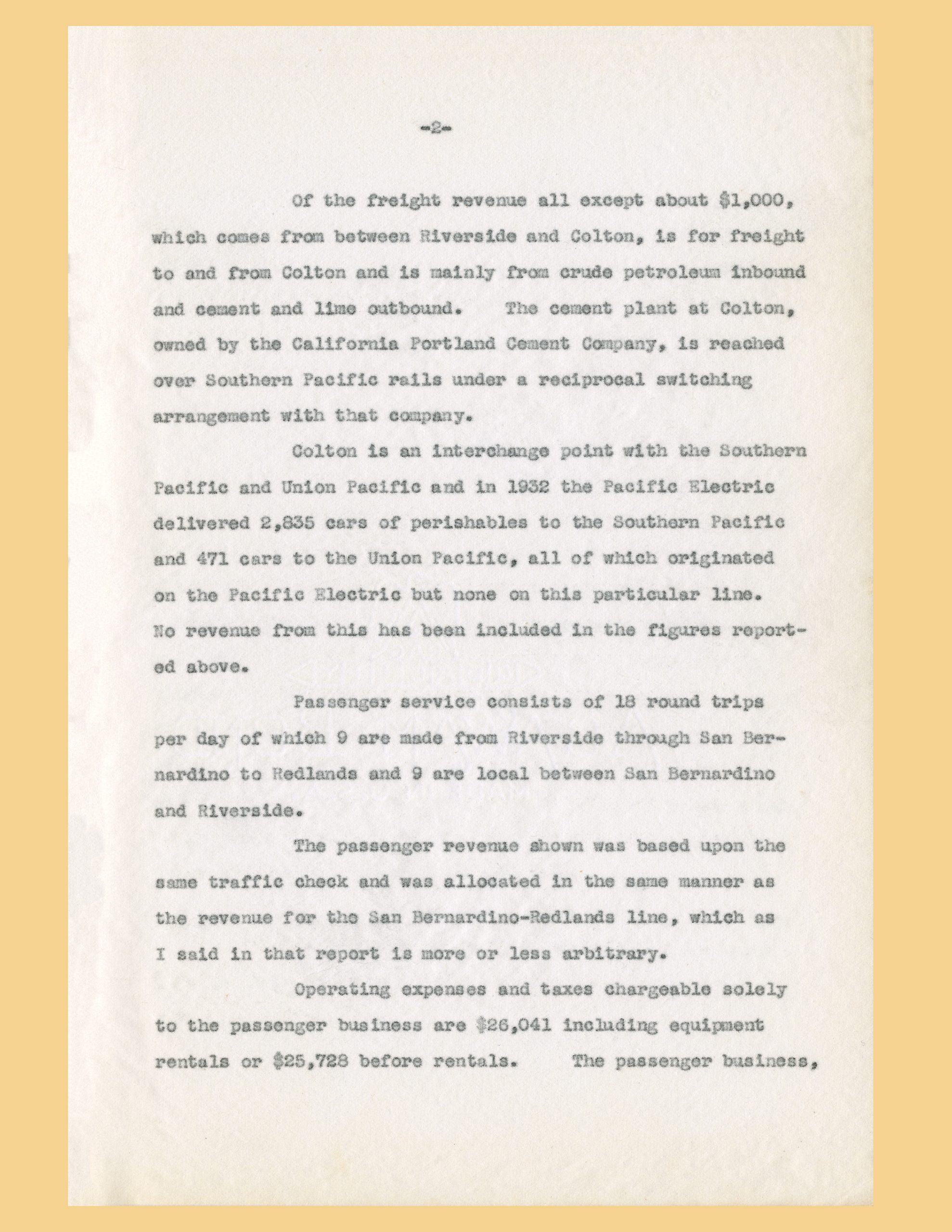
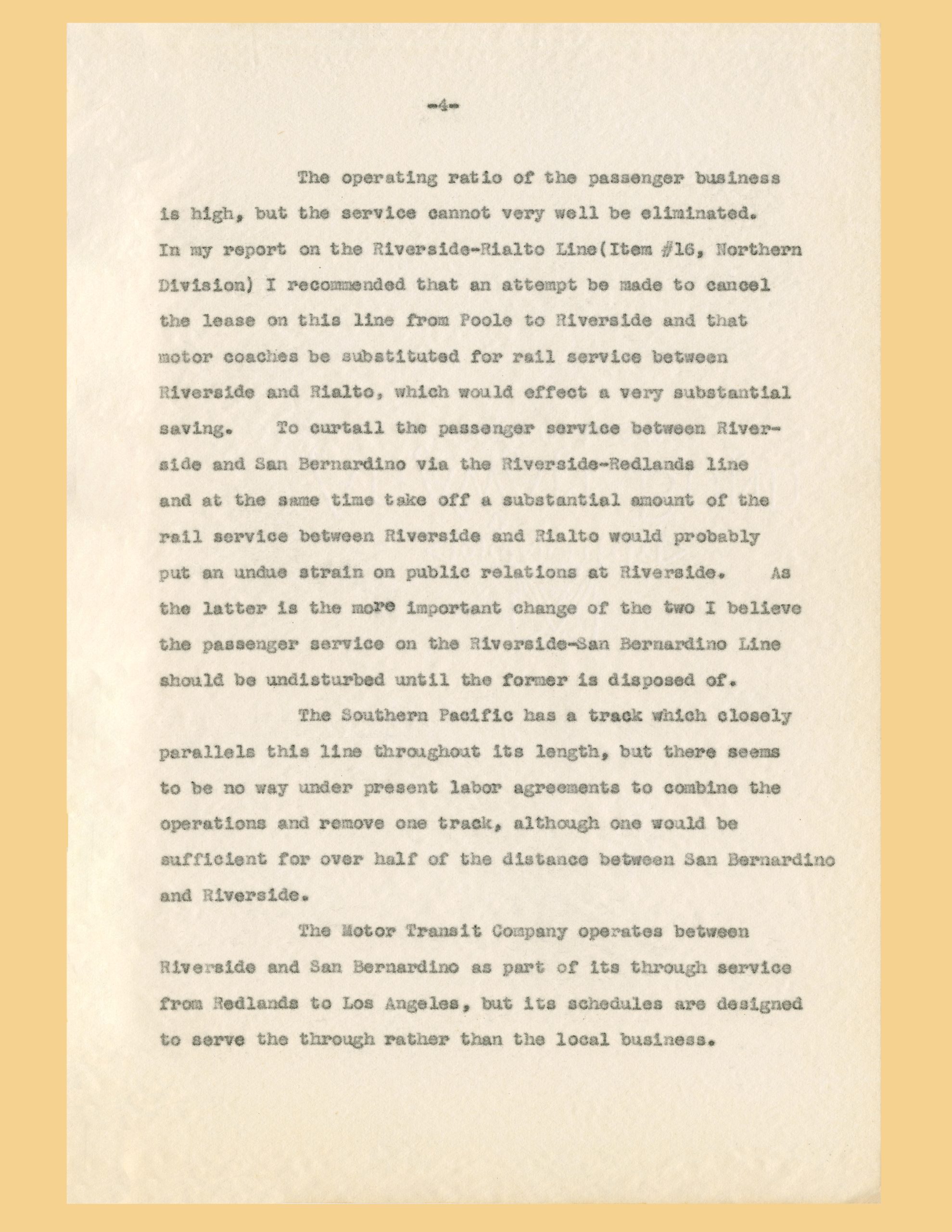
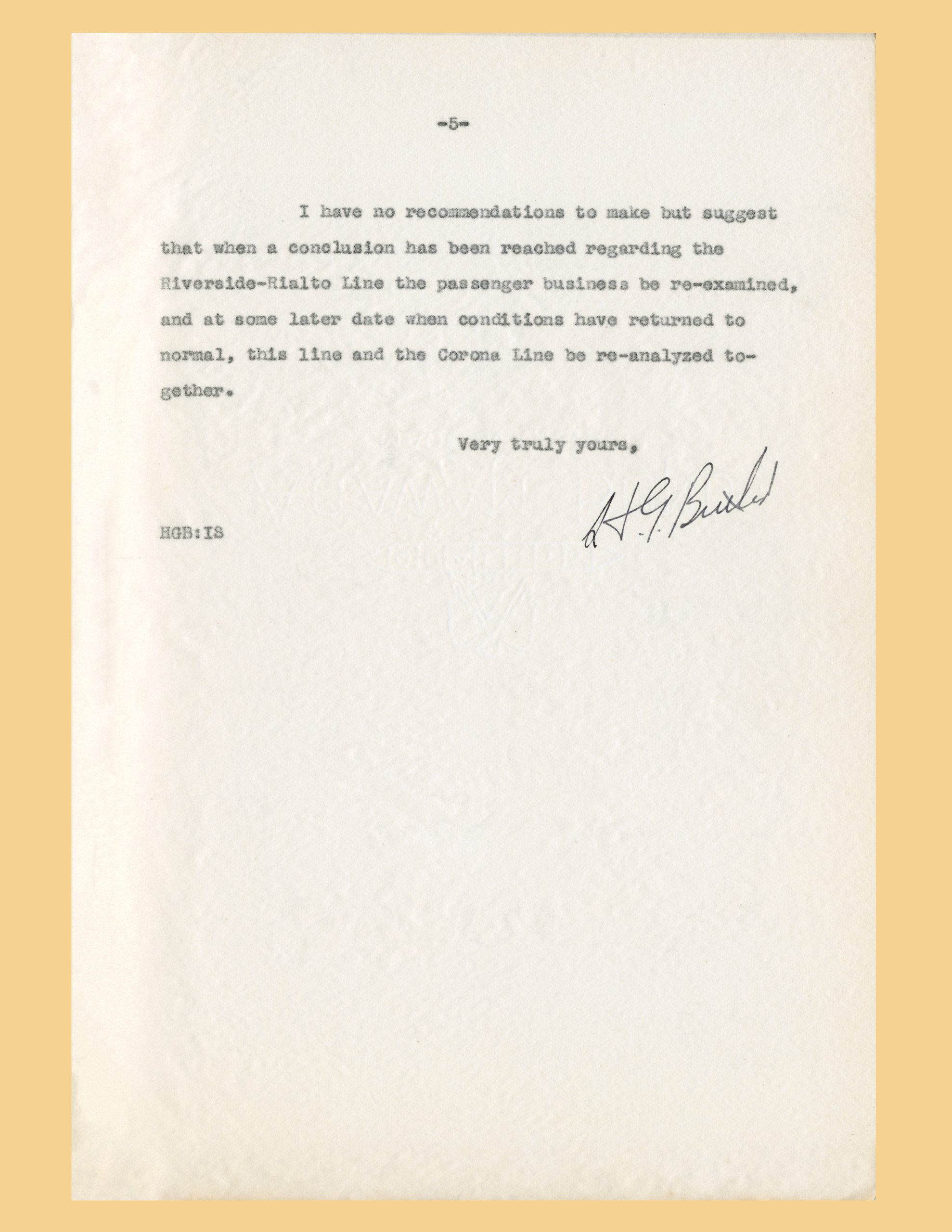
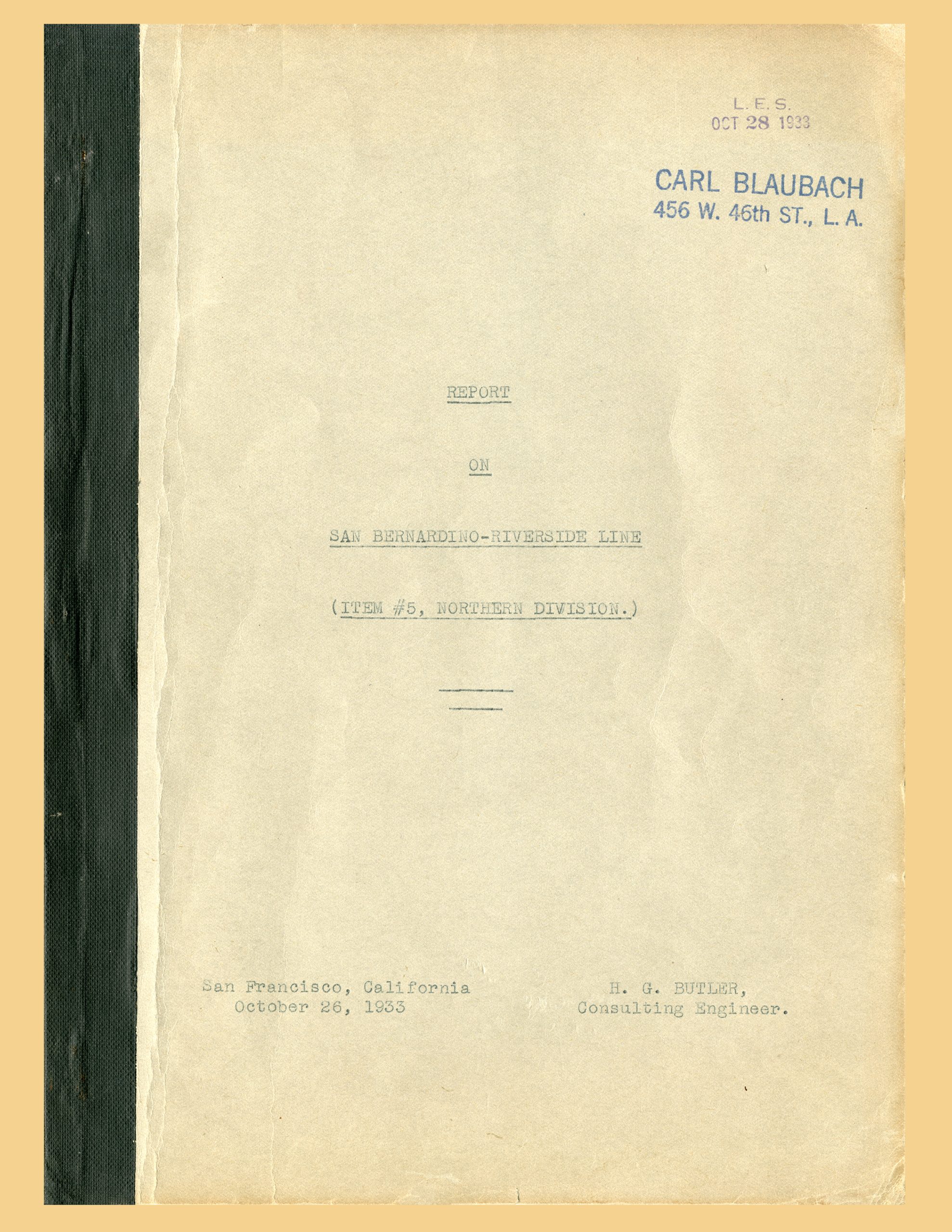
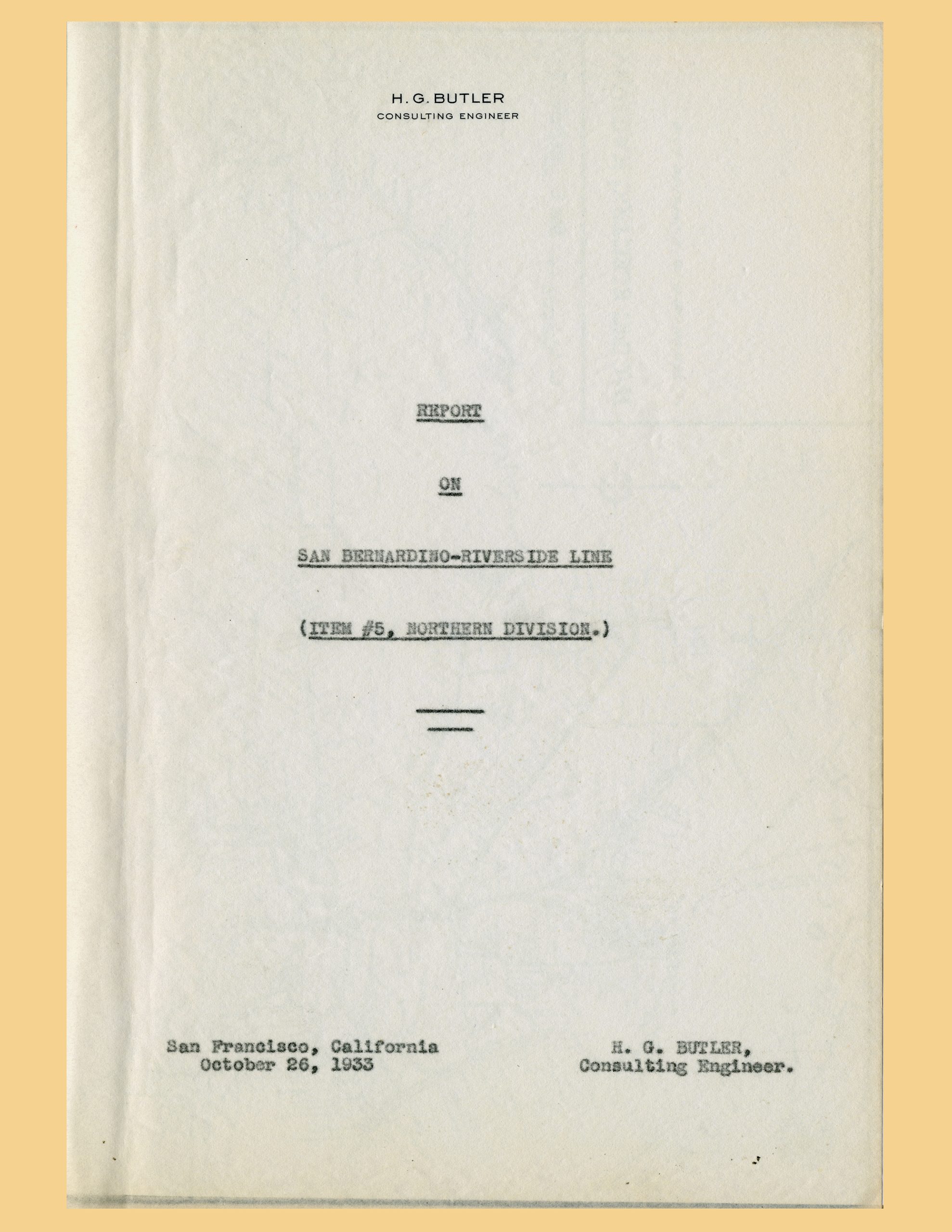
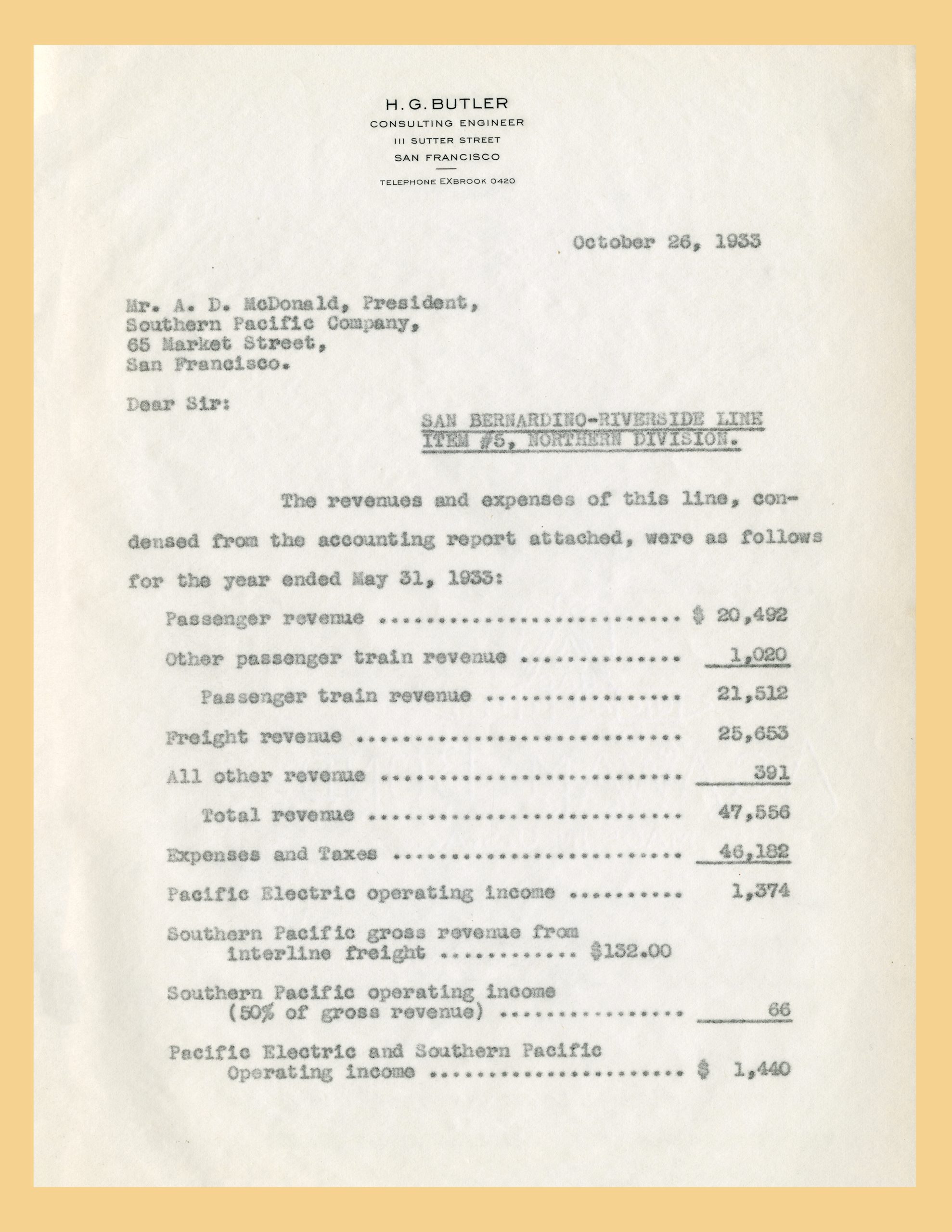
Report on the San Bernardino – Riverside Line October 26, 1933

PE 1214 rolls northbound on Market Street at 4th Street passing the classic Hotel Casa de Anza. Riverside, California, April 17. 1939. Charles D. Savage photo, Donald Duke collection, PERyhs.org.

Above: PE 1214 rolls northbound on Market Street at 4th Street passing the classic Hotel Casa de Anza. Riverside, California, April 17. 1939. Charles D. Savage photo, Donald Duke collection, PERyhs.org.

By Steve Crise

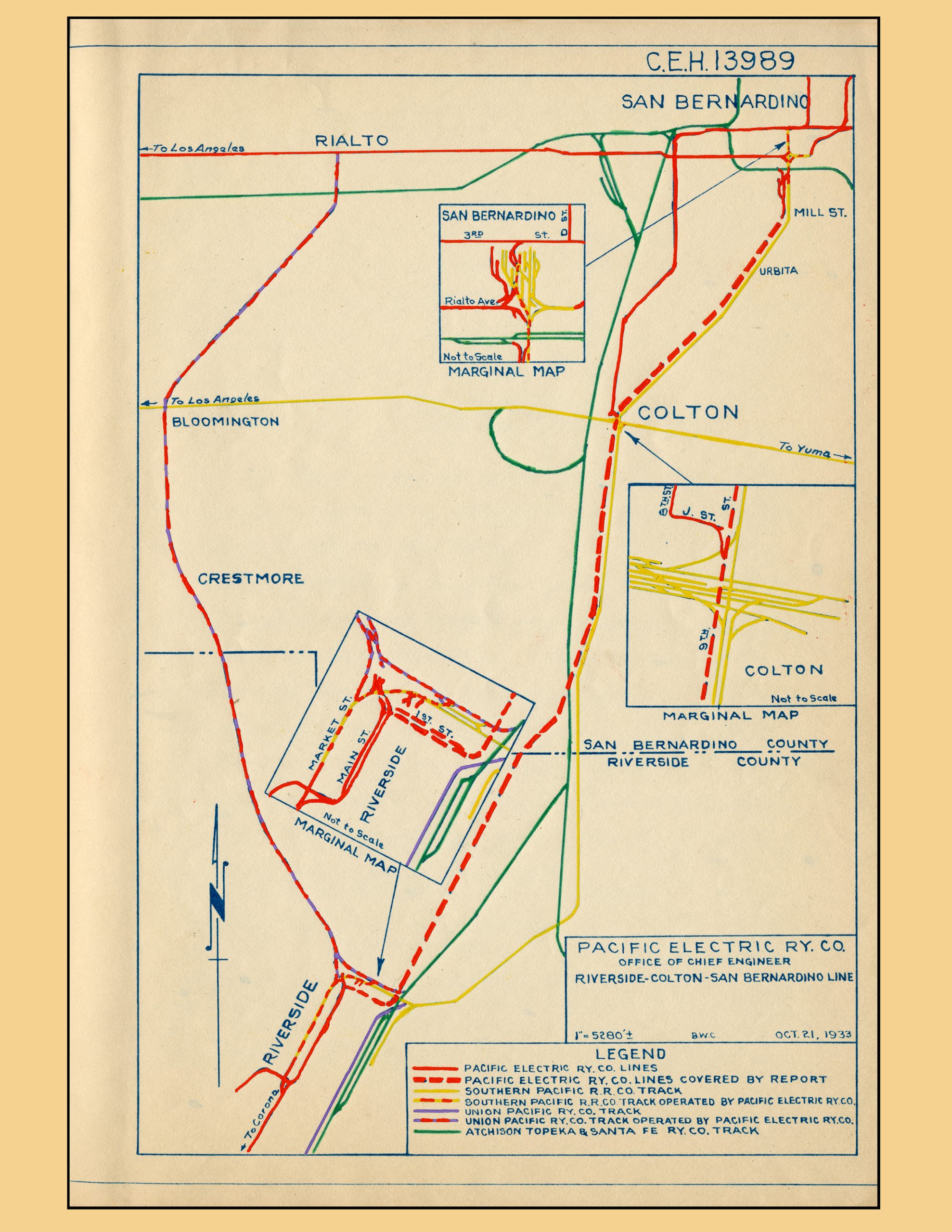
A few months ago, we received a very generous donation from a long-time supporter of the Pacific Electric Historical Society, Martin Banks. His donation of the following report titled “Report on the San Bernardino – Riverside Line, October 26, 1933,” shed some interesting insights on the finical considerations made when officials of the Pacific Electric were reviewing the profitability one of their main lines in the Eastern District, the San Bernardino – Riverside Line.

The comments contained within the report reflect the struggles of the Pacific Electric Railway trying to survive and make some sort of a profit during in the midst of the Great Depression. A breakdown of expenses and losses will be most telling of the issues needed to consider to either maintain service on the line, or to abandoned it partially or completely.

According to “Interurbans – The National Electric Railway News Digest,” Volume 12, number 2, by Ira Swett, the end of passenger on the entire Riverside Line came in the middle of WW II on January 10th, 1943.

Please enjoy this fascinating report that details the viability of the San Bernardino – Riverside Line and gain some understanding of the complexities and issues of abandoning an interurban line.

An example of a dash sign used by Pacific Electric Railway that was hung on the front of the car to better inform passengers of the eventual destination of service. Signs were approximately 24 x 15 inches, sheet metal construction with hand painted lettering. Courtesy of Craig Rasmussen collection, PERHys.org.
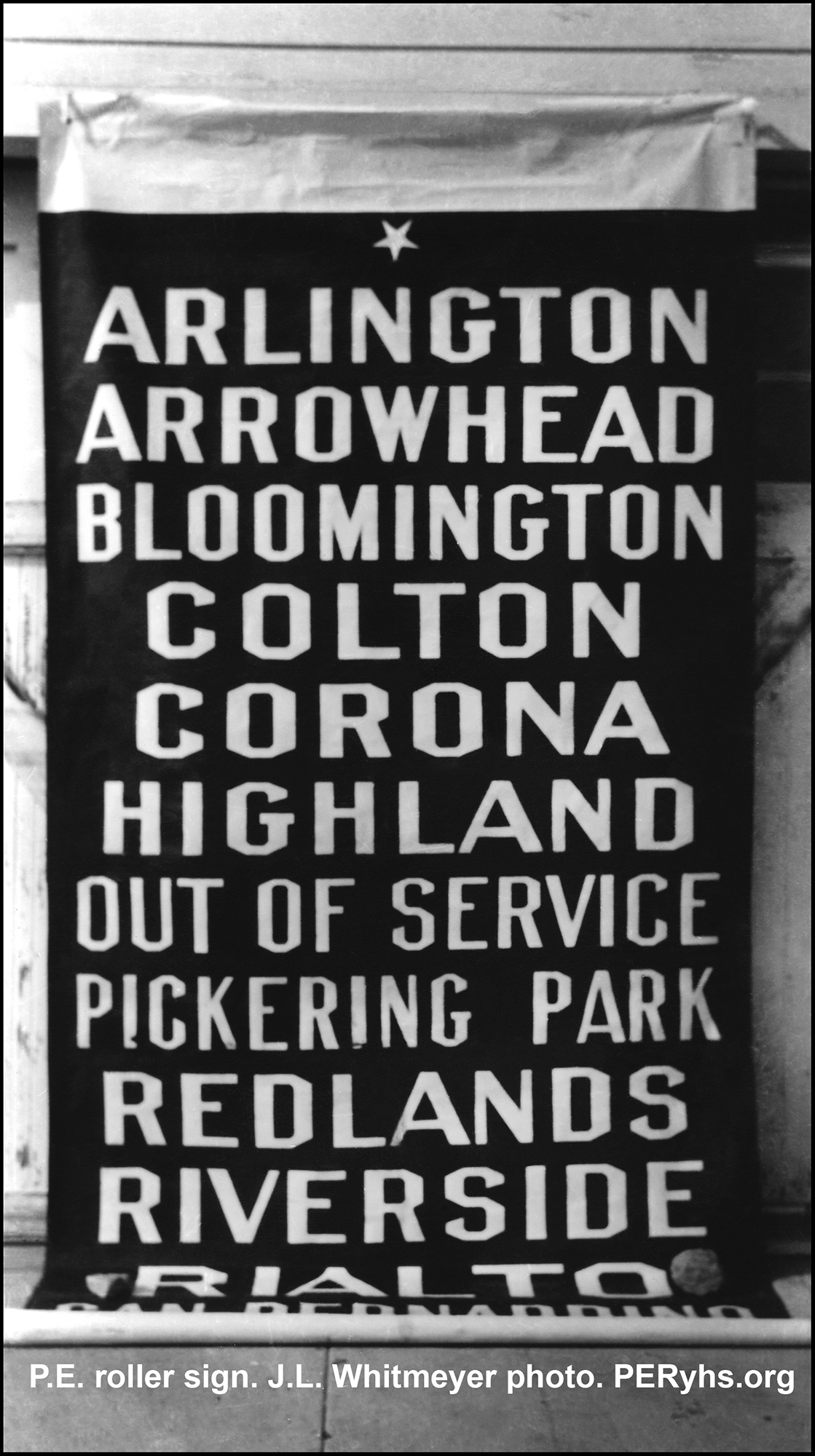
Pacific Electric roller sign showing service of towns and cities in and around the San Bernardino – Riverside area. Jack L. Whitmeyer photo. C.1940, PERyhs.org
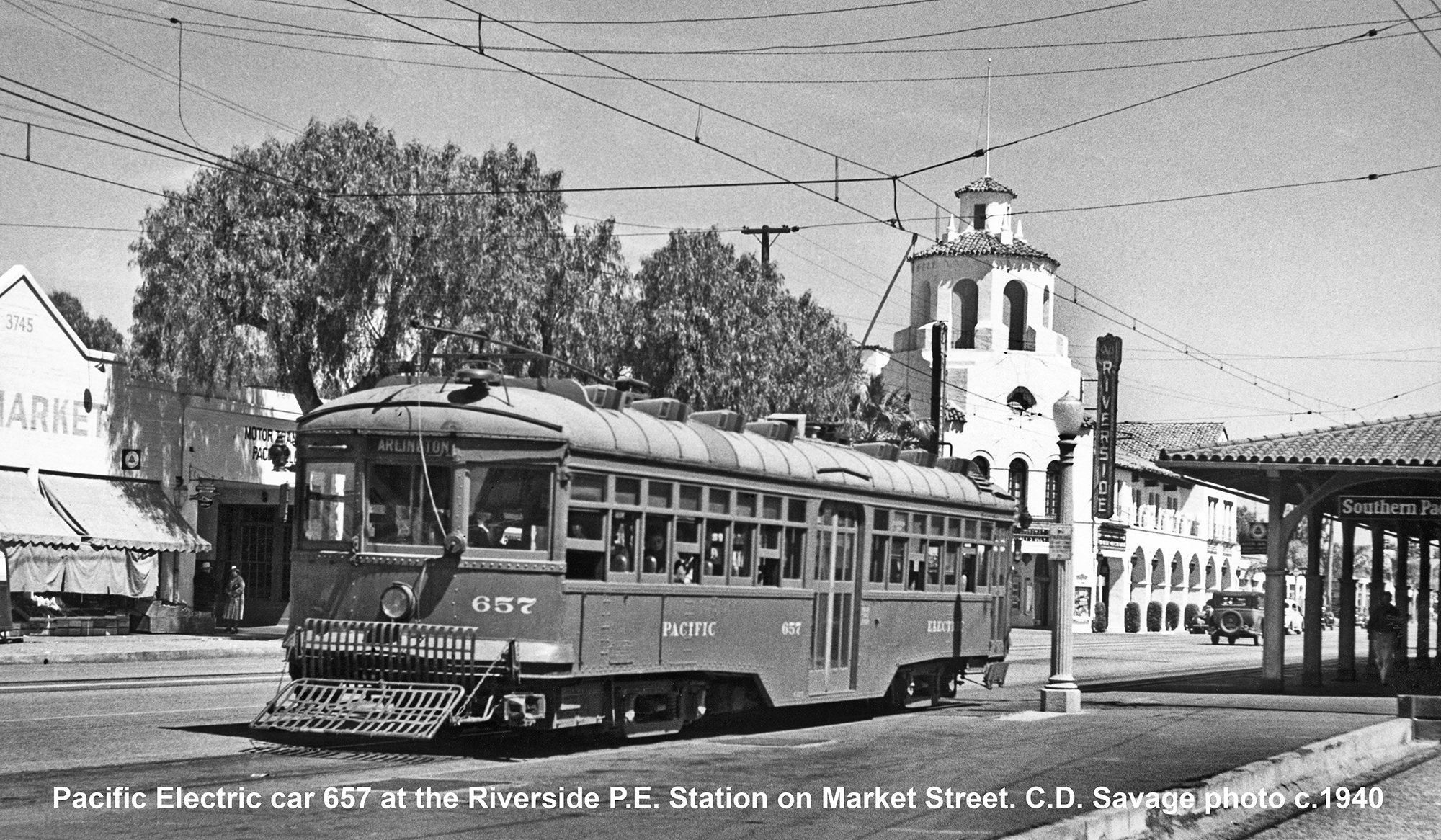
PE 657 makes a stop at the Riverside Station on Market Street just south of the intersection with Mission Inn Avenue before continuing south on Market Street and on to Arlington. Charles D. Savage photo, c. 1940., Donald Duke collection, PERhys.org.

Pacific Electric 5160 at Park Junction

Pacific Electric 5160 at Glendale and Park. Rod Crossley Photo, Pacific Electric Railway Historical Society Collection / MLPSI Collection.

Above: Pacific Electric 5160 at Glendale and Park. Rod Crossley Photo, Pacific Electric Railway Historical Society Collection / MLPSI Collection.

By Steve Crise and Michael Patris

Looking south on Glendale Boulevard, PE 5160 stops at a traffic light at Park Avenue adjacent to Echo Park. In fact you can see a bit of the park on the left side of the frame.

Moments earlier this car departed the Subway Terminal tunnel and made her way northward up Glendale Boulevard to what was then known as Park Junction, located at Park Avenue and Glendale Boulevard. At this point the car would take the diverging rails to the left from the Glendale – Burbank Line and continue its route westbound on Sunset Boulevard, then to Hollywood Boulevard, ending its run at the West Hollywood Car House as read on the dash sign hanging on the front of the car.

Our resident automobile expert Michael Patris has identified the three vehicles in this photo as being, from left to right, a 1950 Chevrolet Fleetline Deluxe four-door sedan. Behind the Fleetline is a 1954 Chevrolet Bel Air with just a portion of the left front of the vehicle visible. On the far right of the frame is captured a 1955 Plymouth Belvedere heading south on Glendale Blvd.

This is another wonderful unpublished photograph from the late E. Rod Crosley, shot sometime around 1955.

Pacific Electric Diesels at Taylor Yard

E. Rod Crossley photo of Taylor Yard

By Steve Crise & Michael Patris

A very unusual view from inside the depths of Southern Pacific’s Taylor Yard in Los Angeles, California finds these three Pacific Electric diesel switchers spotted at the paint rack.

PE 1654, and a pair of Baldwin VO-1000’s were captured by E. Rod Crossley’s camera around 1950 set out on one of the whisker tracks of the turntable at Taylor Yard. On the nose of the second unit masking tape is visible where the orange and black tiger striping will be painted.

In 1944 the Pacific Electric began purchasing small, light-weight diesel-electric locomotives from General Electric in Erie, Pennsylvania with the aim of having them replace electric locomotives on some of their freight lines that were isolated from the rest of the electrical overhead system or those lines that were soon to be de-electrified.

Some interesting scribblings on the side of 1654 just under the numbers reads, “Super Jet” and “SP Studebaker Front.” One can only speculate that the comment about the unit being a “super jet” must refer to the locomotive’s limited speed ability of only a minuscule 35 mph.

As far as the Studebaker scribbling is concerned, perhaps that is a comment on the styling of the locomotive (think Pennsylvania’s GG-1) that somewhat resembles a popular car sold in the late 1940’s and early 1950’s made by the Studebaker Company, most notably the Studebaker Champion designed by Robert Bourke from the renowned Raymond Loewy Industrial Design Studio. The Studebaker Champion of 1950 had unique styling that perhaps prompted some unknown person to scribble their remarks on the side of the little locomotive. Maybe the paint crew at Taylor Yard will eliminate the comments with a fresh coat of Southern Pacific gloss black paint.

References: Ira Swett, Interurbans Special # 37, Southern Pacific Review 1952-82, Joe Strapac.